
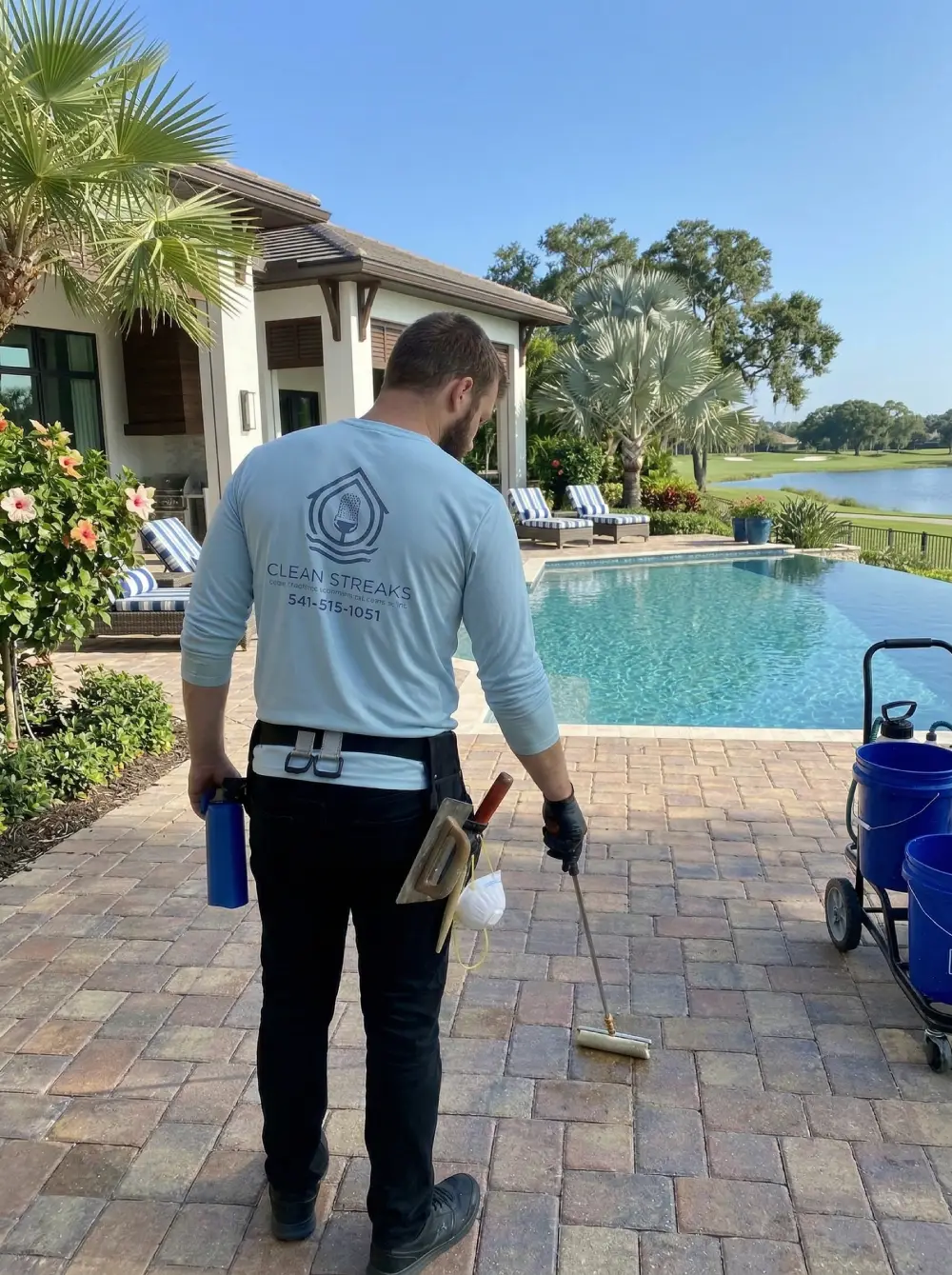
Paver sealing is not a spray-and-go job, and Clean Streaks treats it that way. Before any sealer touches your surface, we run a water test to find out whether old product is already present. If the water beads rather than absorbs, existing sealer is underneath and must be stripped before anything new can bond correctly. From there, we walk your Bonita Springs property and inspect for everything that needs to come off first: oil stains, rust stains, algae, mold, lichen, red tree-nut staining, weeds in the joints, efflorescence, and any cracks or uneven pavers worth flagging before the scope and price are confirmed.
The sealer we apply does more than change how your driveway looks. We use a joint-stabilizing, water-based product that locks in paver sand, reduces weed growth between the joints, and limits shifting over time. We also work exclusively with water-based sealers in Florida because solvent-based products trap moisture under the surface in this climate and produce a milky or cloudy finish. Before anything goes down, we walk you through your finish options, a more natural look or a richer wet look with added sheen, because that choice shapes the product we use and how many coats the job requires.
From the first call to the final walkthrough, we run a tight communication process. We prefer in-person estimates, go over the process and timeline before work starts, and point out anything on the surface worth knowing about upfront. After the job is done, we do a final walkthrough, handle any touch-ups on the spot, and follow up to make sure everything holds the way it should.
Paver sealing is priced primarily by square footage, but the final quote depends on surface condition, material type, prep requirements, and your preferred finish. A starting price for a basic two-car driveway begins at $700–$800, and here is what moves the number from there:
Every quote is based on what we find during an in-person inspection, not a number we give over the phone before we have seen anything.
Every price increase in a paver sealing quote is tied to real scope: stripping old sealer adds labor and product, deep staining requires additional treatment, and a shinier finish means another coat after the flood coat. We do not apply a flat rate to a service where the condition of the pavers genuinely changes what the work requires.

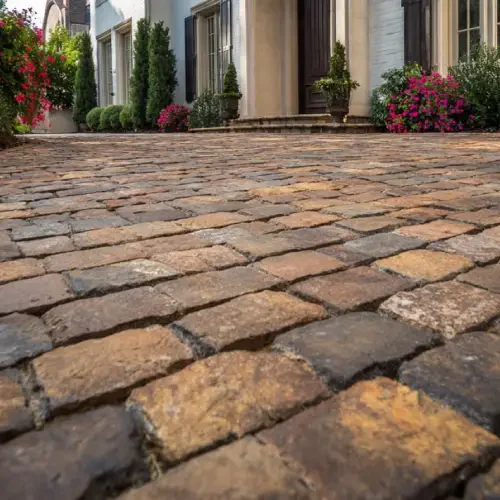
For a natural look on concrete, we use a deep-penetrating water-based sealer. For a richer wet look with sheen, we use Trident Cat 5, a two-part water-based sealer. Both products are water-based by design because solvent-based sealers trap moisture under the surface in Florida’s climate and produce a milky or cloudy finish. We go over both options at the estimate so your choice is intentional before the first coat goes down.
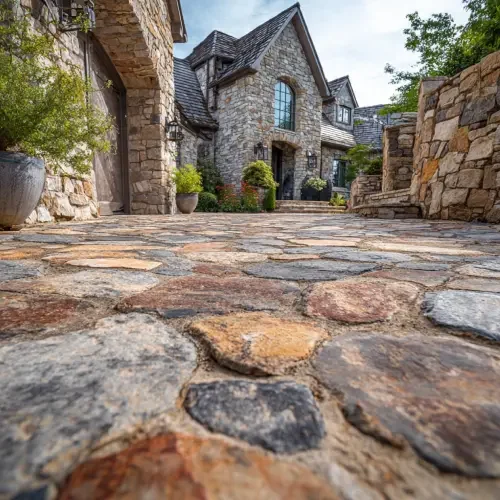
Every paver stone job starts with a water test. If an existing sealer is present, we strip it before applying anything new. We inspect and treat for oil, rust, algae, mold, lichen, red tree-nut staining, efflorescence, and weeds packed into the joints. After surface cleaning, we re-sand the joints to approximately 1/8 inch above or below the lip, hydro-pack the sand, allow everything to fully re-dry, and then apply a flood coat followed by a top coat. A third coat can go down after approximately one hour if more gloss is needed. Proper joint prep also matters structurally: a joint-stabilizing sealer keeps sand locked in, reduces weed return, and limits paver shifting over time.
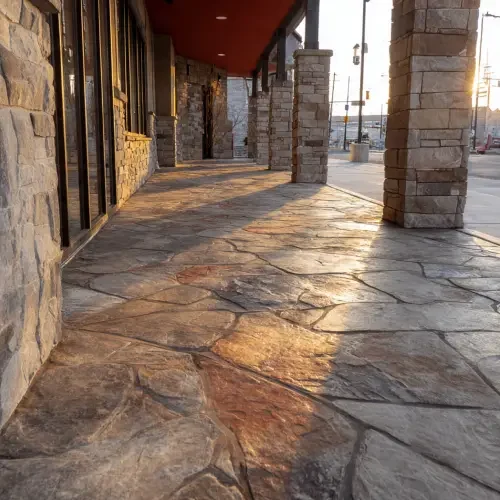
We seal natural stone and travertine using water-based products matched to how these materials behave in Southwest Florida’s humidity. Efflorescence must come off completely before sealing begins so the product can bond without trapping moisture underneath. We do not seal much brick, and we will tell you that upfront at the estimate if it applies to your surface.
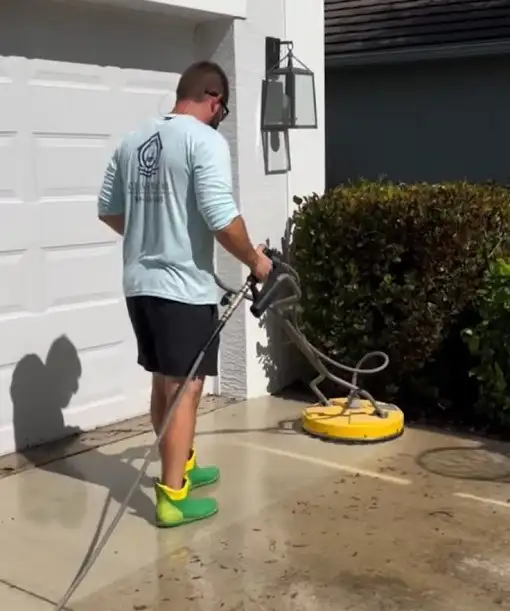
We run every paver sealing job through the same complete sequence: water test, sealer stripping when needed, oil and rust treatment, organic and efflorescence removal, surface cleaning, joint cleanout, final cleaning, full drying, resanding, hydro-packing, re-drying, flood coat, and top coat. Skipping any part of that sequence is the most common reason sealing jobs fail early.
Solvent-based sealers trap humidity in porous Florida surfaces and leave behind a milky or cloudy finish. Our preferred product, Trident Cat 5, is a two-part water-based sealer that sits at the top of what the industry currently offers. It produces consistent results across material types and works for both a natural finish and a wet look.
We walk you through both finish options before application so the decision is yours and it is made intentionally. More gloss requires an additional coat after the flood coat, and we tell you that upfront. Changing the finish afterward means stripping and resealing, which is a new paid service, not a warranty correction.
The joint-stabilizing sealer we use locks in paver sand, reduces weed growth between joints, and limits paver shifting. It addresses long-term hardscape performance at the same time it addresses appearance, which is a more complete result than a surface coat alone delivers.
Surface-level oil contamination can often be improved significantly. Deeply absorbed oil may need specialty equipment and may still carry restoration limits. In severe cases, replacing the affected pavers is the more practical path, and we will say so before taking the job.
We prefer in-person estimates for paver sealing. Before work starts, we cover the process, timeline, and weather requirements. After the job, we do a final walkthrough and follow up with a call. We check in every six months to a year so you always have a clear picture of how the sealer is holding up.
We attended a dedicated paver sealing training just before this service launched and are working toward a formal specialty certification. We are building our paver sealing service deliberately, grounded in current best practices and the process discipline that carries through from the water test to the final coat.
We begin with an in-person assessment, walking the full paver area with you before any equipment is set up. A water test tells us whether existing sealer is present. We also look for oil and rust stains, organic growth, efflorescence, weeds in the joints, and any cracks or uneven pavers worth flagging before the scope and price are confirmed.
If the water test shows old sealer, we strip it before anything else goes down. Oil stains are evaluated for depth and treated accordingly, though deeply absorbed oil may have restoration limits even with targeted treatment. Rust, organic growth, and efflorescence each receive their own treatment using algaecide, SH, or Wipeout as the surface requires.
After stain treatments, we surface clean the entire area and use a turbo nozzle to blow out weeds and debris packed into the joints. Anything left in the joints at this stage shows up in the finished result, so we work through the full surface before moving on.
We do a final cleaning pass using SH or Wipeout, then allow the pavers to dry completely. Moisture in the surface at application time is one of the main causes of a hazy or failed finish. Once dry, we resand the joints to approximately 1/8 inch above or below the lip, hydro-pack, and let everything fully re-dry before opening the sealer.
Once the surface is clean, resanded, packed, and dry, we apply a flood coat followed by a top coat. A third coat is available for more sheen after approximately one hour, and that decision is made before we start. From your perspective, this is a two-day service: the hands-on work may finish in a single day, but the 24-hour cure period means the surface should not be walked on until the following day. We use a water shield throughout application and protect adjacent columns, pillars, sidewalks, and doors from overspray.
We do a final walkthrough after the job and handle any touch-ups before we leave. The sealer typically lasts three to five years depending on sun exposure, and possibly longer in shadier areas. We follow up after service and check in every six months to a year so you always know where things stand.
We back every paver sealing job with a two-year workmanship-related guarantee. Here is what that covers and what it does not:


Paver sealing usually lasts about three to five years. In Bonita Springs, direct sunlight and shade levels make a big difference, so surfaces with heavy sun exposure may start wearing down closer to the three-year mark while shadier areas may last longer.
From the customer’s point of view, paver sealing is generally a two-day service. The active work may be completed in one day, but there is a 24-hour cure period afterward, and the surface should not be walked on during that time.
The process starts with an inspection and water test, then moves into stripping if needed, stain treatment, organic removal, efflorescence treatment, surface cleaning, joint cleanout, final cleaning, drying, resanding, hydro-packing, and a multi-coat sealer application. We take a prep-first approach because the final result depends on the pavers being exceptionally clean and dry before sealing begins.
We test for that first. If the water test shows existing sealer on the surface, it needs to be stripped before new sealer can be applied correctly, and that can affect the final price.
Yes, we inspect for all of those issues as part of the prep process. We treat oil stains, rust stains, organic growth, and efflorescence before sealing, but deeply absorbed oil may have restoration limits depending on how far it has penetrated into the pavers.
Yes. Our preferred sealer is joint stabilizing, which helps lock in the sand, reduce weed growth, and limit paver shifting, so the service supports both appearance and joint performance.
That depends on the finish you want after sealing. We can help you choose a more natural finish or a richer wet look with added sheen or shine, and higher gloss may require an additional coat.
A change in appearance preference is not covered under warranty. If you later decide you no longer want the selected finish, stripping and resealing would be treated as a new paid service.
Paver sealing is a more involved restoration-and-protection service. It can include stripping, stain treatment, efflorescence removal, resanding, hydro-packing, multi-coat application, and curing time, so the scope is much more detailed than a standard cleaning.
We only seal in dry conditions. If rain, fog, or heavy moisture is expected, the job may be rescheduled so the sealer can cure properly and perform the way it should.
We take steps to control overspray and protect nearby areas during application. We use water shields, wet down adjacent surfaces because the sealer is water-based, and carefully shield areas like sidewalks, doors, columns, and pillars.
Yes. We inspect for visible issues like cracks or uneven pavers and point them out before the job moves forward, so you know exactly what we are seeing before investing in sealing.
We prefer clear communication and a walkthrough before every job starts, so we coordinate with you on timing and access during the estimate process. Reach out when you request a quote and we will make sure everything is confirmed before we arrive.
Your pavers take a real beating in Southwest Florida, and the longer fading, staining, and joint deterioration go unaddressed, the more work they require to restore. Every job is backed by a two-year workmanship-related guarantee, and we answer the phone when you call. Reach us at 541-515-1051 or request a quote at clean-streaks.com, and we will take it from there.